
Signing and Exchange of Notes concerning the Grant Aid for the Republic of Yemen “the Project for Improving Learning Outcomes for In-and-out of School Children through the Provision of Sustained Education Services in Taiz (in collaboration with UNICEF)”
2025/2/24
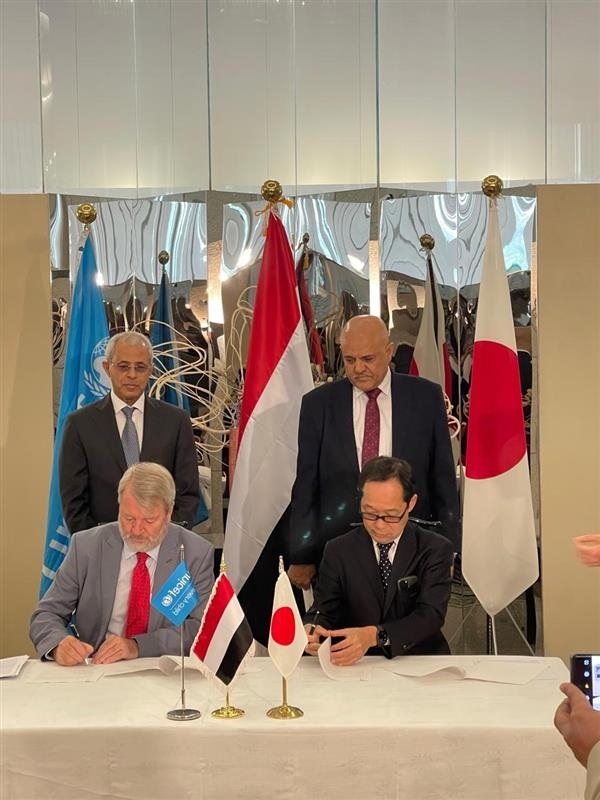
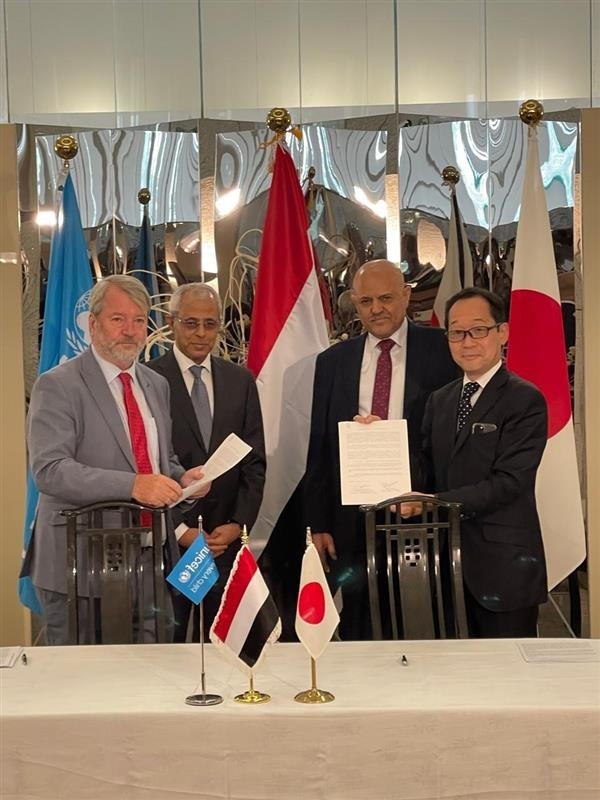
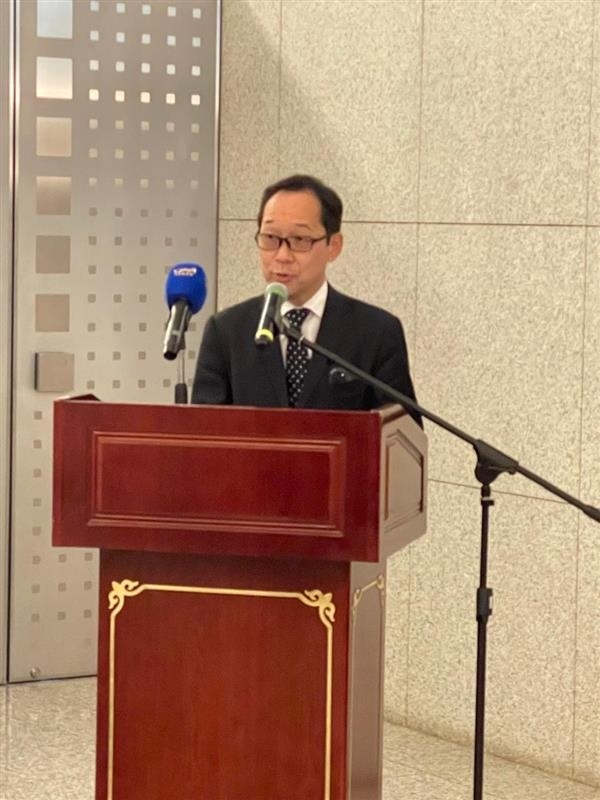
On February 24 (local time), in Riyadh, the capital of the Kingdom of Saudi Arabia, H.E. Mr. Yoichi Nakashima, Japanese Ambassador to the Republic of Yemen, and Mr. Peter Hawkins, UNICEF Representative in Yemen, signed and exchanged notes concerning a grant aid for “the Project for Improving Learning Outcomes for In-and-out of School Children through the Provision of Sustained Education Services in Taiz (in collaboration with UNICEF)” (grant amount: 642 million yen). The signing ceremony was attended by His Excellency Mr. Nabil Shamsan, Governor of Taiz Governorate, and His Excellency Ambassador Mustafa Noman, Vice Minister of Foreign Affairs.
1. In Yemen, due to the lingering conflict, approximately 3.2 million children are currently unable to attend school (OCHA, 2025), and it is estimated that only half of all children of school age begin primary education at the appropriate age (UNICEF, 2024). Ensuring educational opportunities for children affected by the conflict is essential for developing human resources that will support peace and stability in Yemen.
2. This cooperation is expected to improve access for school-age children to quality education who may otherwise be out of school, reduce the risk of their dropping out, and thereby contribute to improving the quality of education in Yemen including by renovating and installing inclusive learning spaces inside and outside schools, by providing educational support for those at risk of dropping out and being out- of-school children, and by conducting teacher training on topics such as psychological care for school children in Taiz Governorate in southwestern Yemen.
3. Supporting peace and stability in Yemen, which faces the Red Sea and the Gulf of Aden, will contribute to ensuring physical connectivity through sea lanes, and the Japanese government, in cooperation with the United Nations and related countries, will continue to actively work toward achieving peace and stability in Yemen.
1. In Yemen, due to the lingering conflict, approximately 3.2 million children are currently unable to attend school (OCHA, 2025), and it is estimated that only half of all children of school age begin primary education at the appropriate age (UNICEF, 2024). Ensuring educational opportunities for children affected by the conflict is essential for developing human resources that will support peace and stability in Yemen.
2. This cooperation is expected to improve access for school-age children to quality education who may otherwise be out of school, reduce the risk of their dropping out, and thereby contribute to improving the quality of education in Yemen including by renovating and installing inclusive learning spaces inside and outside schools, by providing educational support for those at risk of dropping out and being out- of-school children, and by conducting teacher training on topics such as psychological care for school children in Taiz Governorate in southwestern Yemen.
3. Supporting peace and stability in Yemen, which faces the Red Sea and the Gulf of Aden, will contribute to ensuring physical connectivity through sea lanes, and the Japanese government, in cooperation with the United Nations and related countries, will continue to actively work toward achieving peace and stability in Yemen.